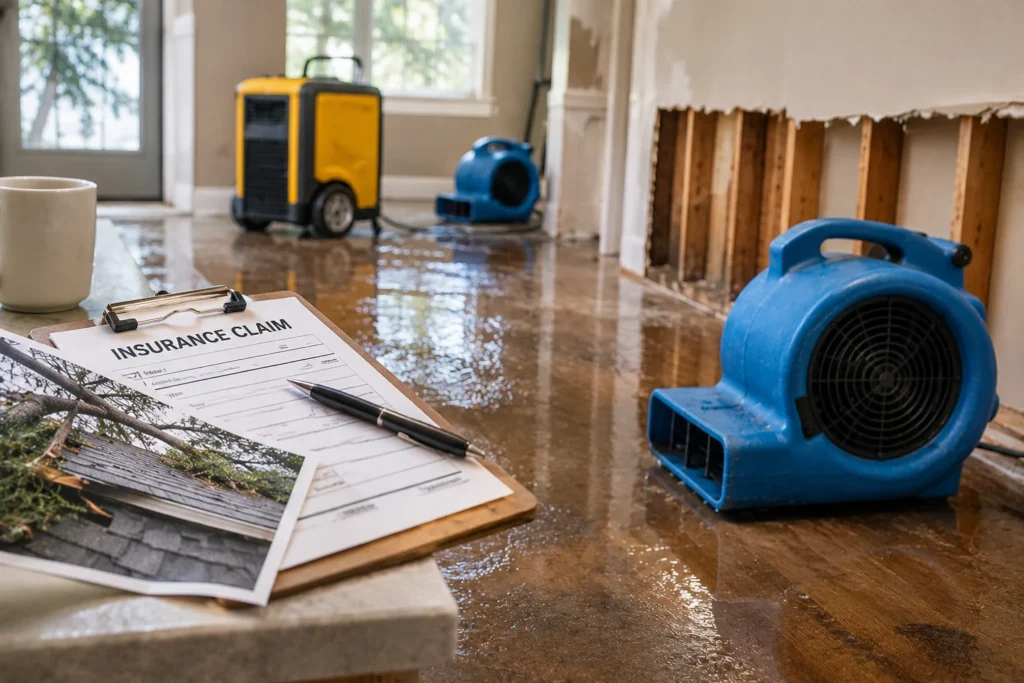
Short answer: After storm or water damage, the insurance claim and the construction work are two separate tracks. Your insurance company decides what is covered and how much it will pay. A contractor evaluates the damage, describes the repair work needed and writes an estimate. Keeping those two roles straight, documenting the damage early and making only temporary repairs until your insurer has seen the property are the steps that most often keep the process moving. This guide explains the general sequence. It is not legal or coverage advice, and no contractor can promise how a claim will turn out.
Storm and water damage tend to arrive at bad moments. A leak shows up after a heavy rain, a tree limb comes through a fence or roof, or a supply line fails while no one is home. The first days are confusing, and homeowners often hear several voices at once: the insurer, a neighbor, a contractor who knocked on the door. This article lays out how the pieces fit together for homeowners in Plano and North Dallas.
Key Takeaways
- Your insurance company makes coverage and claim decisions. A contractor does not.
- A contractor’s estimate describes the construction work. It is not a claim approval and does not guarantee payment.
- Contact your insurer promptly and ask what they need from you.
- Photograph or video the damage before repairs, and keep receipts for any temporary protection.
- Texas Department of Insurance guidance advises limiting early work to temporary repairs, such as tarping a roof.
- Read your policy and ask your insurer questions about it. This guide does not interpret coverage.
What Is the Difference Between the Insurance Claim and the Restoration Work?
The claim is a financial and contractual process between you and your insurance provider. The restoration is the physical repair of your property. They overlap in time and often exchange paperwork, but they answer different questions.
- The insurer decides whether the loss is covered under your policy, what deductible applies and what the payment will be.
- The contractor determines what repair work the damage calls for, what materials and labor that involves and what it is expected to take.
An estimate from a contractor and a payment decision from an insurer can differ. That is normal, and it is one reason homeowners should not assume the two numbers will match. Sonova’s insurance restoration page says the same thing plainly: insurance coverage and claim decisions are determined by your insurance provider.
What Should You Do First After Storm or Water Damage?
Start with safety. If there is active water, electrical risk, structural concern or a smell of gas, get everyone out and call the appropriate emergency or utility service. Once the situation is safe, the Texas Department of Insurance offers consumer guidance on homeowners claims that covers the basics (see TDI: Homeowners claims guidance). In summary, it recommends:
- Telling your insurance company as soon as possible.
- Making a list of damaged property.
- Taking pictures or videos of the damage before making any repairs, if possible.
- Keeping receipts for replaced items and for materials used in repairs.
- Making only temporary repairs to protect the house and belongings, such as boarding a window or tarping a roof.
TDI also notes that permanent repairs made before the insurer sees the damage can create problems with a claim. Because policies differ, ask your insurer what they expect, and read the language in your own policy.
How Do You Document Damage Well?
Good documentation helps everyone: your insurer, your contractor and you. A few habits help.
- Take wide and close photos. Show the room or area, then the specific damage.
- Date everything. Keep photos in one folder or album so they stay together.
- Record the source. If water came from a roof opening, a window or a plumbing failure, note where and when you noticed it.
- Keep temporary-repair receipts. Tarps, board-up materials and similar items are worth saving.
- Write down conversations. Note the date, who you spoke with and what they said.
Do not throw out damaged materials until you have asked your insurer whether they need to see them.
What Does a Contractor Do During Restoration?
A restoration contractor’s job is to understand the damage, describe the repair and carry out the work. Sonova describes its process in plain terms: you contact the company and describe the damage, the team discusses the situation and evaluates the work needed, and the team helps you understand next steps from the first assessment through restoration. Free estimates are offered for potential projects.
Depending on the damage, that can touch several parts of the house. Sonova’s work covers roofing, exterior work, painting, flooring and remodeling, and the insurance restoration page lists storm-related, water, fire and other unexpected damage. A written scope of work should break the project into clear items so you and your insurer can see what is included.
Roof work is a common example. The roofing page describes roof inspections tied to insurance claims and recommends an evaluation when there are signs such as leaks or storm damage. A roofer can tell you what they see and what repair the roof needs. Whether any of it is paid by your policy is still your insurer’s call.
Who Does What? A Quick Reference
| Step | Your role | Insurer’s role | Contractor’s role |
|---|---|---|---|
| Report the loss | Contact your insurer promptly | Opens the claim and explains the process | None required at this stage |
| Protect the property | Make temporary repairs only, keep receipts | May ask what protective steps you took | Can discuss the damage if you contact them |
| Document the damage | Photos, video, lists, notes | May request documentation | Can describe damage from a construction standpoint |
| Inspect and assess | Be available for visits | Sends an adjuster | Evaluates the damage and writes an estimate |
| Coverage decision | Ask questions about your policy | Decides what is covered and how much is paid | Has no role in the decision |
| Repair scope | Review the written scope | May review the scope and estimate | Defines the work, materials and sequence |
| Permanent repair | Authorize the work | May issue payments under the policy | Performs the repairs |
Should the Contractor Be at the Adjuster Visit?
TDI’s guidance suggests being present when the adjuster looks at the damage, and it suggests having your contractor there as well. This is a practical point: someone who understands construction can describe the work that the damage calls for, and you can ask questions on the spot. The role of the contractor in that meeting is to explain the construction side. The adjuster and the homeowner handle the coverage side.
If you are unsure what to ask, write your questions down ahead of time: what is covered, what is excluded, how the deductible works, what documents they need and when you can expect a decision.
How Long Does a Claim Take?
That depends on the damage, the policy and the insurer. Texas has rules about how quickly insurers must respond, and TDI publishes them in its consumer guidance linked above. Because those timelines include exceptions, check the current guidance and ask your insurer for dates that apply to your claim. We do not promise a timeline for repairs here either. A repair schedule depends on the scope, materials, weather and the status of the claim.
What Should You Be Careful About?
Storms often bring out contractors who go door to door. A few precautions apply to any contractor, including us.
- Do not sign anything you do not understand, and take time to read it.
- Ask for the scope in writing, including what work is included and what is not.
- Be cautious about anyone who promises a claim will be approved. No contractor controls that decision.
- Ask how a contractor communicates with your insurer, and keep control of your own claim.
- Check that you are comfortable with who will do the work and how it will be scheduled.
This guide is general information. For questions about your coverage or your rights as a policyholder, contact your insurer or the Texas Department of Insurance. For legal questions, consult an attorney.
Frequently Asked Questions
Can a contractor guarantee my claim will be approved?
No. Coverage and claim decisions are made by your insurance provider.
Should I make permanent repairs right away?
TDI guidance recommends temporary repairs only until the insurer has seen the damage. Ask your insurer before starting permanent work.
Does Sonova Construction handle storm and water damage?
Sonova’s insurance restoration page describes help with storm-related, water, fire and other unexpected property damage. Call to describe your situation and ask whether the work fits.
Need Help Understanding the Repair Side of Damage?
If your home has storm or water damage and you want to understand what the construction work looks like, Sonova Construction can talk through the damage and the next steps. Contact us here or call 972-777-3727. Your insurance company decides coverage, and we can help with the repair side.